South Carolina’s First Vape Tax and the 2026 U.S. State-Level E-Cigarette Tax Wave Reshaping the Market

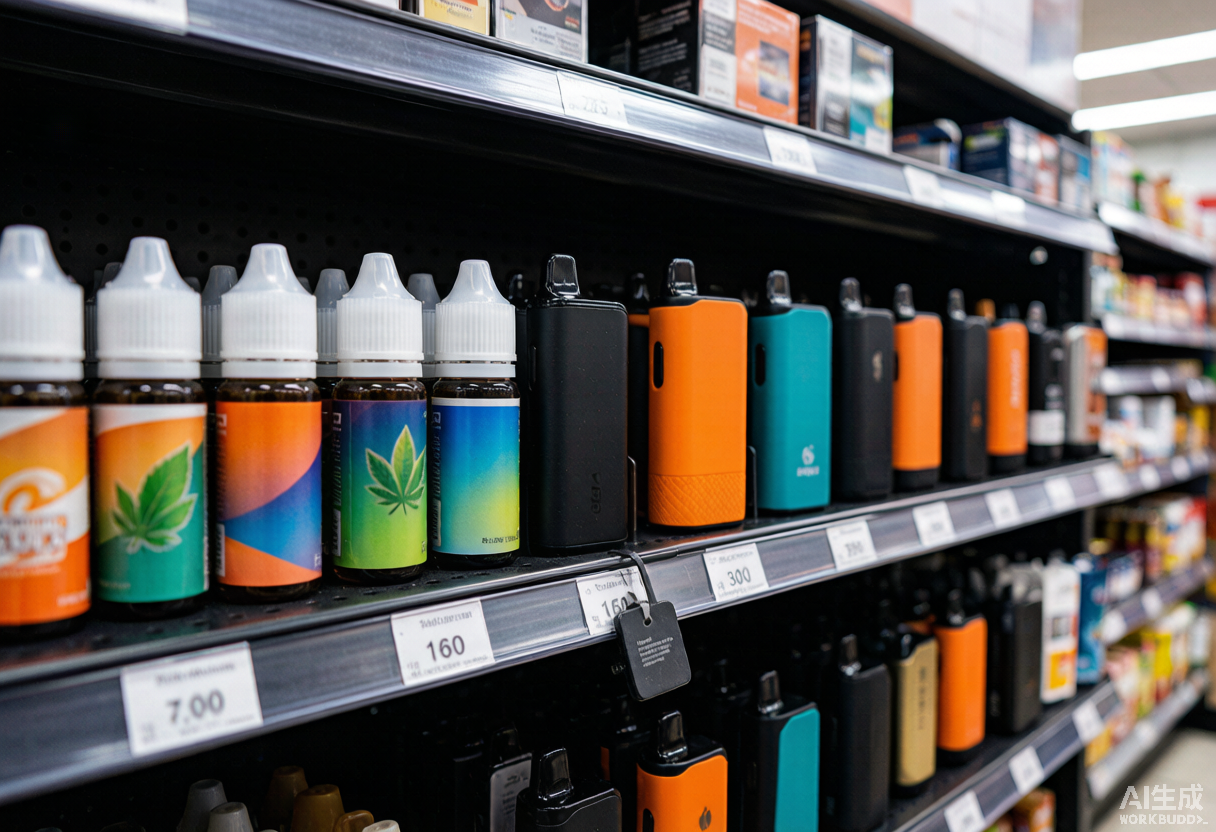
U.S. convenience store vape retail shelves are bracing for October 2026 tax impacts as states rush to impose excise levies on e-cigarette products.
South Carolina Governor Henry McMaster signed House Bill 4303 (Act 234) on May 19, 2026, creating the state’s first-ever excise tax on vaping products and e-cigarettes. The new law imposes a levy of $0.05 per milliliter of consumable nicotine liquid, taking effect October 1, 2026. It simultaneously carves out a preferential lower rate for heated tobacco products, setting them at 21.375 mills per cigarette compared with 35 mills for conventional combustible cigarettes.
South Carolina is far from alone. From Alaska to Delaware, at least seven U.S. states have enacted new or significantly expanded e-cigarette excise taxes in 2026, creating a patchwork of compliance obligations that is forcing vape brands, wholesalers, and Chinese OEM exporters to recalculate retail pricing, supply chain routing, and product mix strategies in real time.
- South Carolina imposes $0.05/mL vape tax from October 1, 2026 (HB 4303) — first-time excise on e-cigarettes in the state
- Heated tobacco gets preferential rate: 21.375 mills per stick vs. 35 mills for combustible cigarettes — signaling harm-reduction-friendly policy design
- Alaska introduces two-tier vape tax: 75% wholesale on synthetic nicotine (July 2026), 25% retail on vapor products (July 2027)
- Delaware advances $0.10/mL vape tax plus 75% wholesale nicotine pouch tax, most aggressive state-level expansion
- U.S. C-store vape sales dropped 6.0% YoY to $6.22B in trailing 52 weeks (Circana, June 2026), accelerated by regulatory headwinds
- PMI H1 2026 smoke-free revenue hit 42% of total ($21.3B net revenue); ZYN shipments rose 2% YoY to 2.9 billion pouches
- BAT H1 2026 New Categories revenue surged +18% to £1.93B, with Modern Oral growing 65.9%
South Carolina HB 4303: What the Law Actually Does
The South Carolina legislature debated e-cigarette taxation for years. Earlier proposals in 2023 and 2024 collapsed over disputes about whether vape products should be taxed at cigarette-equivalent rates or at a percentage of wholesale price. The compromise that finally passed — authored by Representatives Gatch, Cobb-Hunter, Sessions, and others — settled on a volume-based excise of $0.05 per milliliter of nicotine liquid.
That rate aligns South Carolina with its immediate neighbors. North Carolina and Georgia both tax vaping liquids at $0.05/mL, creating a relatively consistent Southeast corridor. For distributors operating across state lines in the Carolinas-Georgia triangle, the uniform rate simplifies compliance.
Heated Tobacco: A Deliberately Lower Rate
The most politically interesting element of HB 4303 is what it doesn’t tax at cigarette rates. Heated tobacco products — think PMI IQOS TEREA sticks, BAT Glo Hyper, or similar HTU devices — are classified separately and taxed at 21.375 mills per stick. That works out to roughly $0.43 per pack of 20, compared with $0.70 for conventional cigarettes.
South Carolina legislators explicitly acknowledged the difference between combustible and heated products in the bill’s legislative findings. This matters for investors and brands: the state is signaling that it views heated tobacco as a less harmful category deserving differentiated tax treatment, not merely a tobacco product to be taxed at the highest possible rate.

State capitol buildings across the U.S. are debating and enacting vape excise taxes at accelerating pace through 2026.
The 2026 U.S. State Vape Tax Map: Who’s Moving and How Fast
The sheer volume of state-level tax activity in 2026 is unprecedented in the e-cigarette sector. Here is where things stand heading into Q4:
| State | Tax Mechanism | Rate | Effective Date | Key Notes |
|---|---|---|---|---|
| South Carolina | Volume excise (per mL) | $0.05/mL | Oct 1, 2026 | First-time vape tax; heated tobacco at lower rate |
| Alaska | Two-tier (wholesale + retail) | 75% wholesale (synthetic) / 25% retail (vapor) | Jul 2026 / Jul 2027 | Synthetic nicotine taxed under “other tobacco products” |
| Delaware | Volume + wholesale hybrid | $0.10/mL vape + 75% wholesale on pouches | Pending full House vote | Most aggressive state-level expansion proposed |
| Georgia | Volume (closed) / wholesale (open) | $0.05/mL closed / 7% wholesale open | Regulatory update 2026 | Administrative alignment; rates unchanged |
| Washington | Ad valorem (retail) | 95% retail price | Already in effect | Highest vape tax rate in the U.S. |
| New York | Wholesale excise (pouches) | 75% wholesale on nicotine pouches | 2026 | Separate from $5.35/pack cigarette tax |
| Indiana | Product origin ban | Sales prohibition (foreign adversary-made) | July 2026 | Not a tax but forces supply chain restructuring |
What These Rates Mean at Retail
For a standard 30mL bottle of e-liquid at a wholesale cost of $4.50, the tax implications vary dramatically by state:
- South Carolina ($0.05/mL): $1.50 tax per bottle — retail impact roughly $2.00–$2.50 with distributor margin pass-through
- Delaware ($0.10/mL): $3.00 tax per bottle — doubles the South Carolina burden, pushing total retail from ~$12 to $15+
- Washington (95% retail): On a $14.99 retail bottle, the state claims $14.24 in excise alone, pushing consumer price above $29
These numbers explain why the Circana data shows U.S. C-store vape sales declining. The category is not shrinking because demand is disappearing — it—s contracting in tracked retail channels as consumers shift to untracked purchase methods, cross-state-border shopping, or online gray-market channels.
— Tobacco Tax Policy Analyst, ECigIntelligence
C-Store Vape Sales: The 6% Decline Tells a Complicated Story
Circana data released in early August 2026 reported that total electronic smoking device sales in U.S. convenience stores fell 6.0% year-over-year to $6.22 billion for the 52 weeks ending June 14. The headline sounds alarming, but the subcategories reveal a market in structural transition rather than simple decline.
Vape hardware drove the contraction. But tobacco accessories — a category that includes coils, tanks, batteries, and related components — surged 38% in the same period. Total tobacco accessories across all channels hit $631 million, up 12% overall. The implication: consumers are not abandoning vaping, they are moving from disposable devices (which capture the full retail price in a single sale) to refillable pod systems and open-tank devices where the initial hardware purchase is followed by recurring accessory and e-liquid spend.
This is precisely the dynamic that favors companies like BAT (Vuse) and PMI (VEEV) over disposable-focused brands, because refillable systems create ongoing consumable revenue streams rather than one-time device sales.
Nicotine pouches are emerging as a tax-advantaged alternative as e-cigarette excise rates climb across U.S. states in 2026.
The Nicotine Pouch Loophole: Altria and PMI’s Regulatory Arbitrage
Here is the elephant in the room that state tax legislators are slowly waking up to: nicotine pouches remain undertaxed or untaxed in most U.S. states, creating a pricing gap that is driving massive consumer migration.
Altria’s On! brand just received FDA authorization for four new pouch flavors (Rich Berry and others), bringing its authorized lineup to 30 products. The company is aggressively expanding On! Plus into retail chains where vape excise taxes have made pouches 30–50% cheaper per nicotine dose than e-liquid alternatives.
PMI, meanwhile, inaugurated a $1.2 billion ZYN manufacturing campus in Aurora, Colorado in late July 2026. The facility will produce ZYN pouches at scale, with initial shipments of ZYN ULTRA already underway. ZYN shipments rose 2% year-over-year to 2.9 billion pouches in Q2 2026 — modest growth, but the new variants and the Colorado capacity expansion point to PMI preparing for a step-change in U.S. oral nicotine demand.
New York’s 75% wholesale tax on nicotine pouches (signed into law in 2026) is the notable exception to the under-taxation trend, and it may serve as a template for other states. But until more states follow New York’s lead, the pouch-vape price differential creates a clear regulatory arbitrage opportunity that benefits Altria, PMI, and BAT’s Velo brand.
PMI and BAT H1 2026: The Smoke-Free Revenue Machine Keeps Accelerating
The state-level tax picture becomes more significant when layered against the H1 2026 results from the two largest Western tobacco companies:
| Metric | PMI (H1 2026) | BAT (H1 2026) |
|---|---|---|
| Net Revenue | $21.3 billion (+9.8% YoY) | £12.24 billion (+1.4% reported / +2.9% organic) |
| Smoke-Free % of Revenue | 42% (on track for 50% by late 2027) | 19.8% (35M consumers globally) |
| Smoke-Free Revenue Growth | +11% organic operating income | +18% to £1.93B |
| Key Growth Driver | IQOS + VEEV + ZYN | Velo Modern Oral +65.9% |
| U.S. Market Trend | ZYN shipments +2% YoY (2.9B pouches) | Vuse returning to double-digit U.S. vapor growth |
| Global Consumer Base | 43M+ smoke-free consumers, 109 markets | 35M smokeless consumers |
— Emmanuel Babeau, Group CFO, Philip Morris International, Q2 2026 Earnings Call
The critical insight for vape market operators: the companies growing fastest are the ones least exposed to disposable vape products. PMI’s 42% smoke-free revenue share is driven by IQOS heated tobacco, VEEV closed-pod vaping, and ZYN oral nicotine — none of which are disposable e-cigarettes. BAT’s +18% new categories growth is led by Velo pouches (+65.9%) and Vuse refillable pods. The U.S. state tax wave is accelerating this structural shift by making disposable vape products progressively more expensive relative to pods and pouches.
What This Means for Vape Brands, Distributors, and Chinese OEMs
The 2026 state tax wave creates three distinct strategic challenges for different parts of the vape value chain:
For Disposable Vape Brands
The math is simple and punishing. A disposable vape that retails at $12.99 in an untaxed state faces a $3–$15 tax burden once state excises are fully layered on, depending on the jurisdiction. At the upper end (Washington’s 95% retail tax), a $12.99 disposable could retail above $27 — pushing it past the psychological price threshold where adult smokers begin questioning whether to simply buy a reusable pod starter kit instead.
For Closed-Pod System Operators (BAT Vuse, PMI VEEV)
Taxation on e-liquid per-mL rates disproportionately penalize open-tank systems where consumers buy large bottles of e-liquid. Closed-pod systems, where each pod contains only 1.5–2mL of liquid, carry a proportionally smaller per-unit tax burden. A Vuse pod at 1.5mL pays $0.075 in South Carolina — trivial relative to the $5.99 retail price of a two-pack. This tax structure quietly advantages the big-tobacco closed-pod model.
For Chinese OEM Exporters
The export data tells the story: China’s vape export volumes remain massive, but the product mix is shifting. Closed-pod systems and nicotine pouch raw materials are growing as a share of Shenzhen exports, while disposable devices face margin compression from both the U.S. state tax wave and the earlier elimination of China’s 13% export VAT rebate (effective April 2026). OEMs that pivot to producing pod-compatible hardware and pouch-filling equipment for PMI/BAT/Altria contract manufacturing will fare better than those still betting on low-cost disposable volumes.
Alaska and Delaware: The Two Extremes of Tax Design
Alaska and Delaware represent opposite ends of the 2026 state vape tax design spectrum, and comparing them is instructive.
Alaska enacted a two-tier system that phases in taxation gradually. Synthetic nicotine products face a 75% wholesale tax starting July 2026, but vapor products get a lighter 25% retail sales tax that doesn’t kick in until July 2027. This phased approach gives manufacturers and retailers a full year to adjust pricing and inventory. It also reflects Alaska’s unique legislative history — the state had vetoed or stalled vape tax bills in every session since 2020, and the compromise reflects a desire to avoid shocking the market.
Delaware, by contrast, is going for the jugular. The proposed bill combines a $0.10/mL vape liquid tax (double South Carolina’s rate) with a 75% wholesale tax on nicotine pouches, a cigarette tax increase from $2.10 to $3.60 per pack, and a 40% wholesale tax on all other tobacco products. If enacted, Delaware would have one of the most comprehensive nicotine excise structures in the country.
Regulatory Ripple Effects: Beyond Taxation
State vape taxes are only one dimension of the 2026 regulatory squeeze. Several overlapping policy movements are converging:
- Product origin restrictions: Indiana’s ban on sales of vapes manufactured in “designated foreign adversaries” (effective July 2026) forces retailers to audit supply chains and potentially cut off Chinese-made inventory
- Federal court precedents: The 8th Circuit upheld Iowa’s e-cigarette registration law in July 2026, setting a regional precedent across seven states that state-level vape regulation does not conflict with FDA authority
- Public health litigation: A coalition of pediatricians and parents sued the FDA in July 2026, challenging enforcement policies that permit unauthorized e-cigarettes and nicotine pouches to remain on the market
- Illicit market enforcement: States are stepping up dedicated enforcement units targeting illegal vape products, with federal appellate courts backing state-level product registries
Investor Outlook: Who Wins, Who Loses
The U.S. state tax wave of 2026 creates a clear bifurcation in the vape sector:
Winners: PMI (IQOS + VEEV + ZYN triple threat, 42% smoke-free revenue, $1.2B Colorado investment), BAT (Vuse recovery in U.S., Velo +65.9% Modern Oral growth), and Altria (On! brand with 30 FDA-authorized pouch variants). These companies benefit from regulatory structures that penalize disposables while leaving heated tobacco and nicotine pouches at lower effective tax rates.
Losers: Disposable-focused brands (especially Chinese-origin products facing both U.S. state taxes and India’s Indiana-style origin restrictions), independent vape shops facing per-state compliance costs, and open-tank e-liquid manufacturers whose products carry the highest per-mL tax burden.
— ECigIntelligence Market Analysis, August 2026
Closing Outlook: What Happens Next
South Carolina’s October 1 effective date is less than eight weeks away, and it is almost certainly not the last new state vape tax of 2026. Delaware’s bill is advancing through its legislature, and several other states with pending 2026 sessions are watching the political dynamics closely.
For the global vape supply chain, the message is unmistakable: the era of untaxed U.S. e-cigarette retail is over. The companies positioned to profit are the ones already investing in heated tobacco, closed-pod systems, and oral nicotine pouches — categories that state tax designers are deliberately treating more favorably than disposables and open-tank e-liquid.
The next twelve months will determine whether the U.S. vape market consolidates around three or four major smoke-free platforms — PMI’s IQOS/VEEV/ZYN, BAT’s Vuse/Velo, and Altria’s On!/NJOY — or whether a fragmented patchwork of state regulations creates enough gray-market opportunity to sustain a long tail of smaller operators. Based on the 2026 tax trajectory, the consolidation scenario looks increasingly likely.
HB 4303
US State Excise Tax
E-Cigarette Regulation 2026
PMI H1 2026
ZYN Manufacturing
BAT Velo Growth
Nicotine Pouches Tax
C-Store Vape Sales
Disposable Vape Decline
Heated Tobacco Tax Rate
Alaska Vape Tax
Delaware Tobacco Tax
Chinese OEM Supply Chain
PMI VEEV Pods